Use case
One take in, a finished TikTok ad out
Upload one talking-head take of up to three minutes. Get back a finished 9:16 MP4 with captions burned in, ready for TikTok Ads Manager. A thirty second ad costs about 110 credits. Here is what goes in and what it costs, why TikTok buries imported creative, what the first second has to do, and how many openings a real test needs.
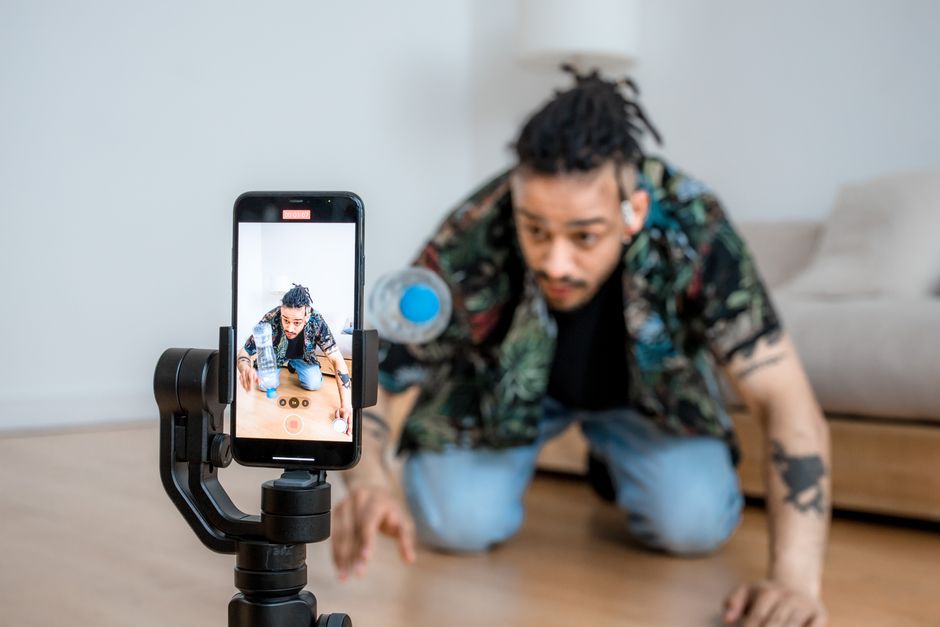
- One finished thirty second ad
- 110 CR
- Trial credits, 7 days, no card
- 300
- Caption packs, all vertical native
- 6
What you feed it, what comes back, and what it costs
The input is one talking-head take, filmed on a phone, up to three minutes.
That is the whole requirement. No script format, no project setup.
It transcribes the read, drafts the cut, searches b-roll and places clips against your words.
Then it hands back a 9:16 MP4 with captions burned in.
A batch costs 100 credits, which covers the transcript, the director pass and the b-roll search.
Rendering costs 20 credits per output minute, so a thirty second ad is 10 more. Call it 110.
Basic is $39.99 a month for 2,500 credits, about 22 finished ads.
Premium is $79.99 for 5,000 credits, about 45. A $15 top-up adds 1,000 credits.
The trial is 7 days and 300 credits with no card.
You direct the result by editing the transcript. Highlight a phrase and a clip lands over exactly those words.
Delete a line and the cut rebuilds. Change the pace and it re-cuts the whole piece.
Phone take to TikTok Ads Manager
Film one take
Up to 3 minutes, phone is fine
Batch
100 CR: transcript, director pass, b-roll
Direct on the words
Highlight, delete a line, set the pace
Export
9:16 MP4, 20 CR per output minute
TikTok can tell where a video was made, and it buries the imports
This is the part that decides whether the ad works, and it is not a software question.
TikTok is the large ad surface where organic and paid are made with the same equipment.
A phone, a window, a person talking.
That sets a low production bar and a punishing honesty bar.
The tells that mark an ad as an import are consistent and boring.
Letterboxed widescreen footage with blurred bars. A logo animation before anybody speaks.
Studio lighting with a voice from somebody not on screen. Lower thirds borrowed from a corporate deck.
None of those are bad craft. They are craft from a different room.
The audience has been trained to scroll past them in under a second.
What reads native is unglamorous. A face filling most of the frame, a claim spoken in the first breath.
Cuts landing on the beat of the sentence, and text that looks like the text the app puts there itself. That is exactly what comes out of here.
- Blurred letterbox bars are the single clearest signal that an ad came from somewhere else
- A logo before the first word costs you the only second that mattered
- Coverage caps at 40, 45 or 52 percent by pace, so the face stays on screen
This is the whole editor
Highlight a phrase and a clip lands on those exact words. No timeline, no keyframes, no layers.
The first second has one job and it is not introducing you
Start on the sentence, not on the setup.
If the read begins with hi guys, so today I want to talk about, the first useful second is the fourth.
Nobody arrived there.
Cut into the middle of the thought.
The most common fix on a weak TikTok ad is deleting the first two lines.
Here that is a deletion in the transcript rather than a re-edit, and the cut rebuilds around it.
The claim has to be specific enough to be doubted.
A promise nobody could disagree with reads as an advertisement, and an advertisement is the one category of video the feed is optimised to skip.
Movement matters in the same second. Something should be changing on screen while the claim is said.
That is what the clip placement is doing when you highlight the phrase.
Captions are not accessibility here, they are the primary channel. Six packs plus colour, weight, size and position, with per-word emphasis.
Twenty-two openings a month is what a TikTok test actually needs
Published benchmarks put the share of creatives that carry spend at roughly 5 to 8 percent, per Motion's analysis of 550,000+ Meta ads.
TikTok creative fatigues faster than that figure implies, not slower.
So the number of openings you can afford decides the account.
Four a month against a one-in-thirteen rate is a lottery, however good the four are.
One three minute take is the raw material for a dozen openings.
The change between them is a first line rather than a new shoot.
At about 110 credits an ad, twelve openings is roughly 1,320 credits, inside one month on Basic at $39.99.
The behaviour that changes is what gets made.
The blunt opening you talked yourself out of gets filmed, because being wrong costs 110 credits instead of a production slot.
Finished ads a month, by plan
- Trial, 300 credits2 ads
- Basic, $39.9922 ads
- Premium, $79.9945 ads
- Each $15 top-up9 more
Your own footage, the free library, and the file that lands in Ads Manager
The b-roll search covers millions of free clips, so the world around your claim is handled from the first batch.
Anything showing your specific product comes off your own phone.
Upload it to your workspace library once and it is available to every ad afterwards.
Highlight the phrase where you name the product and the shot lands over exactly those words.
Swap the clip in any spot, from your library or from the free ones, without leaving the editor.
The flat facts to plan around. Exports are 9:16 MP4, which is exactly what TikTok wants and nothing else.
Source takes cap at three minutes and one project makes one finished ad.
There is no timeline, no keyframes and no layers, which is why a variant is a decision rather than an afternoon.
The transcript is the interface, so a read has to exist. If nobody will film, the avatar module builds a presenter from a photo and a voice-over at 320 credits per minute of render.
Questions people ask
- What exactly do I upload?
- One talking-head video of up to three minutes, filmed on a phone. That is the only required input. Your own product clips can be added to the workspace library and dropped onto the words they belong on.
- What does one TikTok ad cost?
- About 110 credits: 100 for the batch and 20 per output minute to render, so 10 for a thirty second cut. Basic is 2,500 credits a month at $39.99, roughly 22 ads.
- Can I get a 1:1 version for other placements?
- No. Every export is 9:16 MP4. Square and widescreen versions have to be produced with a different tool.
- Who should not use this?
- Advertisers whose TikTok creative is product cinematography or animation with nobody speaking. For spoken vertical ads, this is the fastest route from a phone take to a file in Ads Manager.
Film ninety seconds saying the thing you would say to a friend, and a native 9:16 ad comes back with b-roll and captions already on it. Most tools hand you a project to finish.