Guide
Short tutorial video format: one skill in three steps
A short tutorial teaches one skill in three steps, often cut down from a longer lesson you already give. Here is a 45-second structure, an example script and how to shorten your video.
In short
- A short tutorial video teaches one skill in three steps, usually cut down from a longer lesson.
- A short tutorial works best at 40 to 50 seconds, filmed vertically with you talking to the camera.
- Every step needs an exact detail, such as an angle, a count or a time.
- Viewers should get the basic result from the short video alone, without watching the long one.
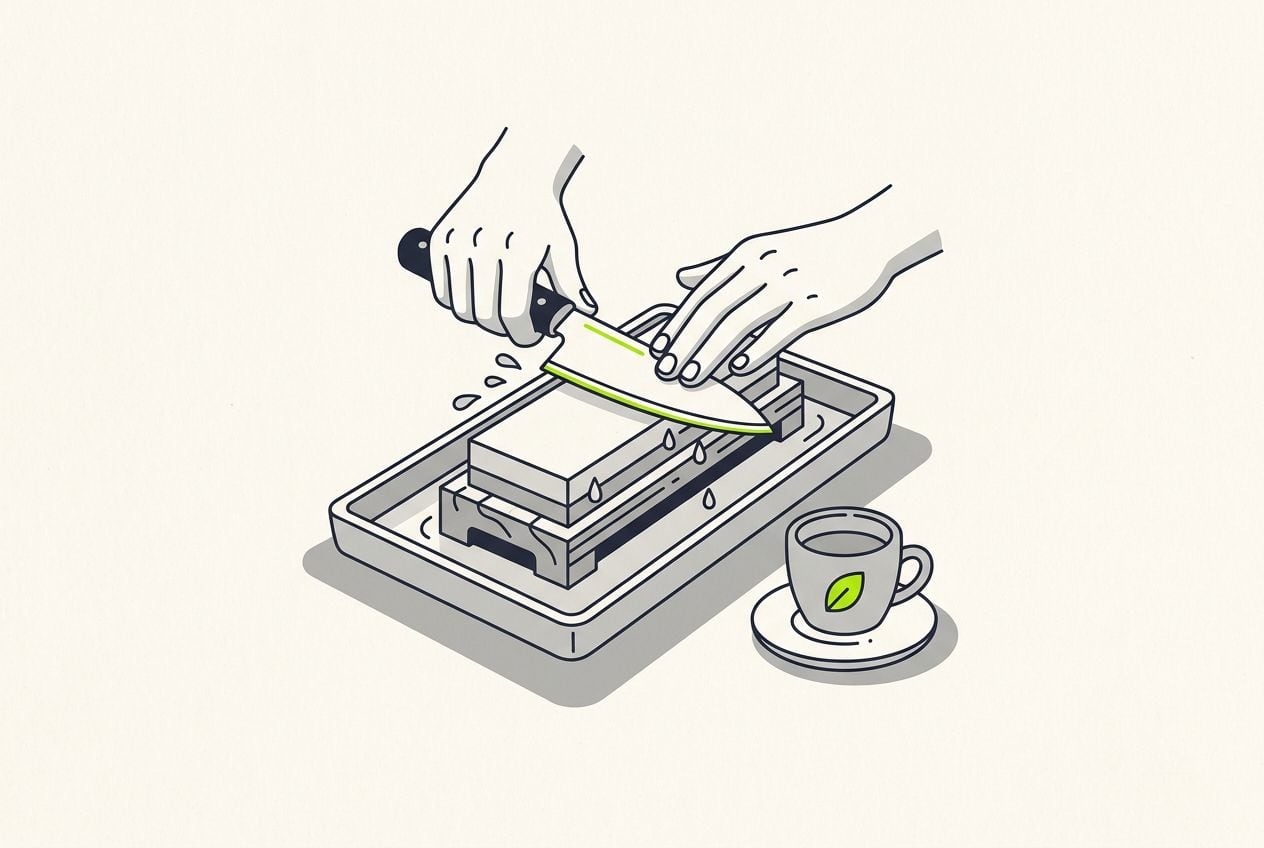
- length of the example structure
- 45 s
- steps kept from the long lesson
- 3
- words in the example script
- 95
What is a short tutorial video?
A short tutorial video teaches one skill in three steps, often taken from a longer lesson. Some people call it a tutorial cut-down.
- It usually runs 40 to 50 seconds, in vertical 9:16.
- It opens with the result and how long or how much it takes, such as sharpening a kitchen knife in under a minute.
- The middle names what the viewer needs, then gives three steps with one exact detail each.
- It ends by pointing to the full lesson, for the cases the short version leaves out.
- The test is simple: the viewer can get the basic result from the short video alone.
- Exact details make it a tutorial. "Hold the blade at fifteen degrees" can be followed, while "hold it at the right angle" cannot.
Who should make short tutorials?
It works when you already teach something at length and a short version can stand on its own.
- Shops and online stores can use it when their product needs a technique. The tutorial sells the tool without mentioning a price.
- Software trainers can cut down their long screen-recorded lessons.
- Coaches and tradespeople who run workshops or a YouTube channel can reuse what they already teach.
- It also works for people who have never heard of you, because a useful skill needs no introduction.
This is the whole editor
Highlight a phrase and a clip lands on those exact words. No timeline, no keyframes, no layers.
How to structure a short tutorial in 45 seconds
Each of the three steps gets 10 seconds: the action plus one exact detail.
- The list of what you need takes about 5 seconds. It stops viewers starting without the towel or the second tool.
- Keep the three steps a beginner needs to get a decent result.
- Leave rare cases and advanced technique for the long version.
A short tutorial in 45 seconds
Three steps of 10 seconds, each with one exact detail.
Result
0-4 s. The result, with the time or cost
What you need
4-9 s. The tools, named exactly
Step 1
9-19 s. Set-up, with a measurement
Step 2
19-29 s. The motion, with a count
Step 3
29-39 s. The check that shows it worked
Full lesson
39-45 s. Where the long version is
Example short tutorial script
Here is an example script for a cookware shop. It is 95 words, which takes about 45 seconds to say out loud.
Example script: sharpening a kitchen knife
One line for each part of the structure above.
| Part | Time | What you say |
|---|---|---|
| Result | 0-4 s | Sharpen a kitchen knife in under a minute, with a ten dollar stone. |
| What you need | 4-9 s | A whetstone, water, and a towel under the stone so it cannot slide. |
| Step 1 | 9-19 s | Soak the stone for five minutes. Hold the blade at about fifteen degrees. Two stacked coins under the spine give you the angle. |
| Step 2 | 19-29 s | Push the edge away from you, heel to tip, ten times. Light pressure. Then flip the knife and repeat. |
| Step 3 | 29-39 s | Test it on a sheet of paper. A sharp edge slices. A dull one tears. |
| Full lesson | 39-45 s | The ten-minute lesson, with chips and serrated knives, is on our channel. |
Part: Result
- Time
- 0-4 s
- What you say
- Sharpen a kitchen knife in under a minute, with a ten dollar stone.
Part: What you need
- Time
- 4-9 s
- What you say
- A whetstone, water, and a towel under the stone so it cannot slide.
Part: Step 1
- Time
- 9-19 s
- What you say
- Soak the stone for five minutes. Hold the blade at about fifteen degrees. Two stacked coins under the spine give you the angle.
Part: Step 2
- Time
- 19-29 s
- What you say
- Push the edge away from you, heel to tip, ten times. Light pressure. Then flip the knife and repeat.
Part: Step 3
- Time
- 29-39 s
- What you say
- Test it on a sheet of paper. A sharp edge slices. A dull one tears.
Part: Full lesson
- Time
- 39-45 s
- What you say
- The ten-minute lesson, with chips and serrated knives, is on our channel.
Hook lines for a short tutorial
The hook is your first sentence. It is the result, plus a number that makes it sound doable.
- [Result] in under [time], with a [cheap tool].
- How to [skill] in three steps. You need [tool] and [tool].
- Here is the [time] version of my [long lesson].
How to shorten a long lesson, and where b-roll goes
You can write and film the short version fresh. Or you can film a loose run-through of 2 to 3 minutes and cut it down.
- The run-through is faster when you know the subject well.
- Cut out the history, the rare cases and the advanced variations.
- Use close-up clips of your hands as b-roll during the three steps.
- Stay on your own face for the result at the start and the pointer to the full lesson.
- For software, record the screen and zoom in so the text is readable on a phone.
Common short tutorial mistakes
A short tutorial fails when it is a trailer for the long video instead of a lesson. Viewers dislike a tutorial that holds back the method.
- Teasing instead of teaching is the biggest mistake. Give the full basic method in the short version.
- Vague steps cannot be followed. Every step needs a number, such as degrees, strokes, minutes or grams.
- Seven steps at 5 seconds each is too many. Keep three and move the rest to the long lesson.
- Without a check at the end, viewers do not know if it worked. Finish the steps with a simple test.
Short tutorials on Reels, TikTok and Shorts
Short tutorials get saved on all three apps. As a paid ad, they are a gentle way to reach people who do not know you yet.
Where a short tutorial works
| Where | How to use it |
|---|---|
| YouTube Shorts | The best fit, because your long lesson is often on the same channel and the Short can point to it. |
| TikTok | Put the result in the headline on screen, so the cover works as a title. |
| Instagram Reels | Use it the same way as on TikTok. |
| Paid ad | Teach first. Your product appears as one of the tools the viewer needs. |
Where: YouTube Shorts
- How to use it
- The best fit, because your long lesson is often on the same channel and the Short can point to it.
Where: TikTok
- How to use it
- Put the result in the headline on screen, so the cover works as a title.
Where: Instagram Reels
- How to use it
- Use it the same way as on TikTok.
Where: Paid ad
- How to use it
- Teach first. Your product appears as one of the tools the viewer needs.
Making a short tutorial in Cutroom
Cutroom edits the video for you. You upload your run-through, shorten it in the transcript, and get a finished vertical video back.
- You upload one video of yourself, up to 3 minutes long.
- You delete the lines you do not want in the transcript, and the video is cut to match.
- You can trim the opening or the ending too, and the captions stay in sync with what remains.
- You upload your close-ups and highlight the sentence for each step. Each clip lands on those words.
- You get a 9:16 MP4 with captions burned in. Your first video is free, with no card, and you have 7 days to make it.
The Cutroom editor
The transcript sits on the left and the finished 9:16 video on the right. You shorten the lesson by deleting lines.
B-rolls · 5
 1
1 2
2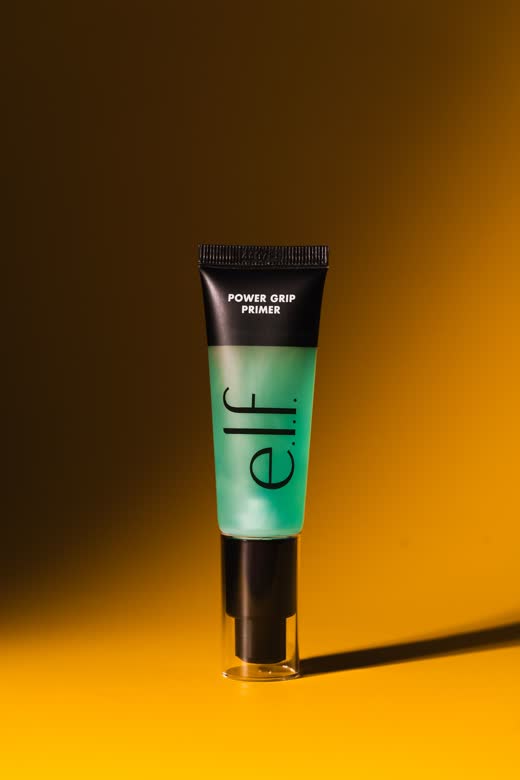 3
3 4
4 5
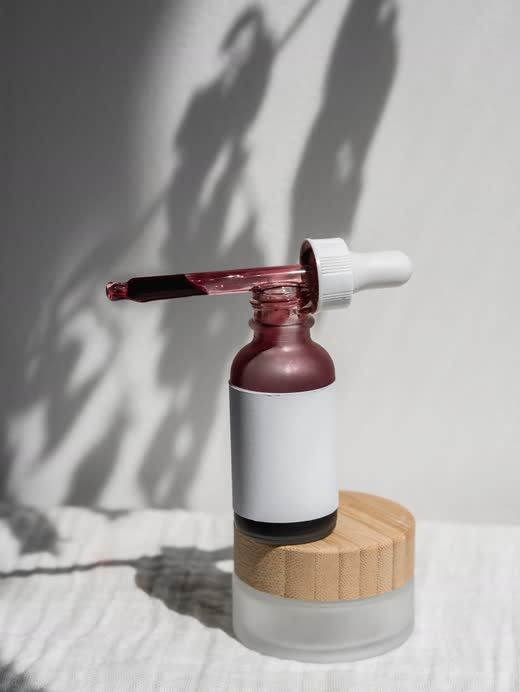
5Most face serums make one big promise, then quietly do nothing. This one has three ingredients, works in ten days, and costs less than your coffee habit. If your skin doesn’t change, you get every cent back.
highlight = b-roll · struck out = already cut
▸ 0:07 / 0:26 · shot 1 of 5
- 1B-roll on the exact wordsReal footage, placed where showing beats telling.
- 2The opening headlineWritten from what you said. Pick one it drafted, or write your own.
- 3Captions in 40 themesPick a theme, then its font and colour.
- 49:16, ready to exportExport renders one vertical MP4.
Questions people ask
- How long should a short tutorial video be?
- 40 to 50 seconds. The example here runs 45 seconds and 95 words: three steps of 10 seconds each, plus the result, the tools and the pointer to the full lesson. A skill that needs more than three steps needs a longer video.
- How do I cut a ten-minute tutorial down to 45 seconds?
- Keep the result, the tools and the three steps a beginner needs. Remove the history, the rare cases and the advanced variations. Then film the short version fresh, or film a run-through of up to 3 minutes and delete lines until it fits.
- Will a short tutorial stop people watching the long one?
- No. The short version reaches people who would never start a ten-minute video, and the ones it helps are the most likely to want the full lesson. Point to it at the end.
- Do I need close-up footage for a tutorial?
- Yes, for any physical skill. Film a close-up of each step with your phone upright, 5 to 10 seconds per clip. For software, record the screen and zoom in so the text is readable on a phone.
- Can Cutroom cut a long video down into a short tutorial?
- Yes, from a video of up to 3 minutes. Cutroom writes out what you say, and you delete the lines you do not need. It adds captions, puts your opening line on screen as a headline, places your close-ups on the steps and exports a 9:16 MP4. Your first video is free, with no card.
- When is a short tutorial the wrong format?
- When the skill is dangerous or cannot be shortened safely, such as electrical work. Show the result as a before and after video instead, and leave the method to a professional.
Film the run-through once, then delete lines until the lesson fits in 45 seconds. Your first video is free.