Guide
Not for the testing. For four shots a phone cannot get
Not for volume testing. A phone, a window and a willing person outperform a booked shoot there. Yes for four specific cases. A second location. Controlled lighting. A demonstration nobody has filmed. A hero film you will run for a year. This page covers what each route is good at, the arithmetic that decides it, and how to brief a shoot when you do book one. By the end you will know which half of your month needs a camera crew.
- Cases where booking is the right call
- 4
- Tested creatives per expected winner
- 14
- A phone session that yields several ads
- 20 min
Four cases where a phone cannot get there, and a booking is the honest answer
A second location. Anything shot somewhere that has to be arranged, permitted or lit is a production. No transcript workflow produces one.
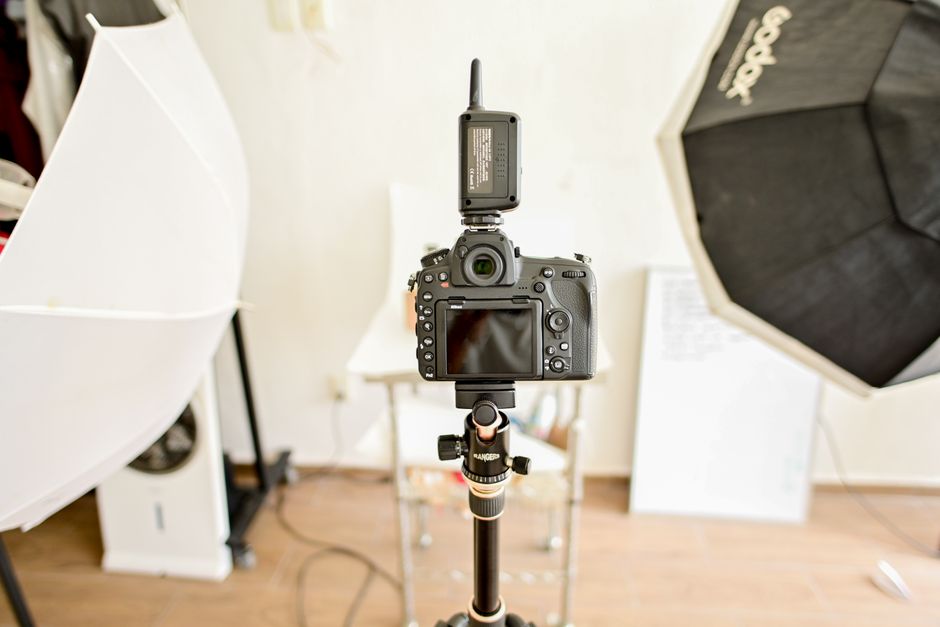
Controlled lighting. Some products only look like themselves under light somebody designed. Cosmetics, jewellery, food and anything with a finish are the usual cases.
A demonstration nobody has filmed. If the sale depends on the viewer watching the thing happen, the shot is the ad and everything else is secondary.
A hero film you will run for a year. When one asset carries a lot of spend for a long time, the economics reverse and craft is the cheap part.
Outside those four, a booked shoot buys reliability and rights rather than performance. It buys them at the cost of throughput, and throughput is what finds the winner.
What each route is actually good at
Three rows go to the videographer without argument. The other three are where the phone route is not close, and they are the rows that decide a month.
| Booked shoot | Phone and a window | |
|---|---|---|
| A second location, lit and permitted | The only route | Not possible |
| A demonstration nobody has filmed | The only route | Not possible |
| One asset carrying a year of spend | Worth every hour | Under-built for the job |
| Twelve tested creatives this month | Calendar and budget say no | One session, several ads |
| A second version of an ad that worked | A new booking | A 10 credit export |
| Reading as a person rather than a brand | Polish signals advertisement | An ordinary room is evidence |
For volume testing, production polish is a cost with a negative return
In a feed placement, a graded, tripod-mounted, colour-matched shot tells a viewer this is an ad before a word arrives. That classification happens in under a second.
So the studio version of a script can lose to the phone version of the same script, and frequently does. This is not an argument for bad video.
Unintelligible audio loses people faster than anything else. Audio is the one line worth attention. Stand closer. Switch off anything with a fan. Choose a room with soft surfaces.
Everything else about a phone is already sufficient. Eye height. An ordinary room behind you. One continuous take. The message doing the work.
The real cost of a booking is not the invoice. It is the coordination and the calendar. Those are what cap how many creatives a month exist.
Tested creatives a month, by route
Your own arithmetic rather than a benchmark. The count is what reaches results, and the count is a scheduling problem.
- Booked shoots2 a month
- Commissioned per deliverable6 a month
- Phone sessions, batched12 a month
This is the whole editor
Highlight a phrase and a clip lands on those exact words. No timeline, no keyframes, no layers.
The arithmetic decides it, and it is not close for testing
Published benchmarks put the winner share at 5 to 8 percent, per Motion's analysis of 550,000+ Meta ads. That is roughly fourteen tested creatives per expected winner.
A route producing two attempts a month finds a winner every seven months. A route producing twelve finds one roughly every six weeks.
That gap is the entire argument. It has nothing to do with which route makes a better single video.
So the sane structure is both. Book the shoots for the four cases above. Run a cheap high-frequency route for the volume that finds the angle worth shooting.
Test cheaply, then produce expensively. Nobody argues about the budget for a shoot when the concept has already returned its cost twice.
Fourteen tested creatives, one expected winner
At the middle of the published 5 to 8 percent range. Two attempts a month cannot reach this grid inside a quarter.
If you do book, brief on the four details that actually get missed
Shape, in numbers. Write 1080 by 1920 rather than vertical. Vertical means different pixel dimensions to different people, and a wrong delivery is a reshoot in disguise.
Safe zones. The app draws its interface over your frame. Anything that must be read belongs in the central band, roughly 190 pixels clear of each end on a 1920 tall frame.
Coverage. Ask for the speaker to be present at the hook, the proof and the ask. An ad buried under cutaways loses the person the viewer was following.
Source material, not only finals. Ask for the raw takes as well as the graded exports. Raw takes are reusable. A finished file is not.
That last one is the most commonly skipped and the most expensive to skip. A flattened export has no word-level timing left, so a new version means a new edit rather than a change.
Agree a schedule for the raw files too. Ask when they arrive and where they live. Footage sitting on somebody else's drive is footage you do not actually have.
Book for the four shots. Run the other twelve through a phone.
The cheap route has one prerequisite and it is not equipment. Somebody has to point a camera at their own face and say something specific. Twenty minutes covers several ads.
Cutroom takes it from there. One talking-head take of up to three minutes returns a finished 9:16 MP4, directed on the transcript rather than a timeline.
Highlight a phrase and a clip lands over exactly those words. Delete a line and the cut rebuilds around the gap. Change the pace and it re-cuts, with coverage held at 40, 45 or 52 percent.
A batch is 100 credits. An export is 20 credits per output minute. A thirty second ad is 110 credits, against the 2,500 Basic carries at $39.99 a month.
Three facts to plan around. Three minutes of source per take. 9:16 output. Word level as the finest edit available.
That is the division of labour. Book a videographer for the shots that need one. Stop booking one for the volume, because the volume is where the winner is found.
Questions people ask
- Will a professionally shot ad outperform my phone video?
- Often the reverse in feed placements, because production value signals advertisement and advertisement is what people are scrolling to avoid. Where it does win is on demonstrations, controlled lighting and anything a phone physically cannot capture.
- What equipment should I buy instead?
- Almost none. A phone you own, a window and a quiet room cover the format. If you spend anything, spend it on audio, and even that is usually solved by standing closer and switching off whatever has a fan in it.
- Can a videographer shoot volume for me?
- They can, and the constraint moves rather than disappearing. Booking, briefing and revision rounds cap the count regardless of who holds the camera. Compare the routes on turnaround and revision rounds and see what the calendar allows.
- Is the phone route right for every ad?
- It covers everything that is one person speaking to camera, which is most of a month. A demonstration nobody has filmed, or one asset carrying a year of spend, still needs a videographer. Book for those two and run the rest yourself.
Book for the four shots a phone cannot get. Cutroom turns the other twelve into finished 9:16 files at 110 credits each, which is where the winner is actually found.